


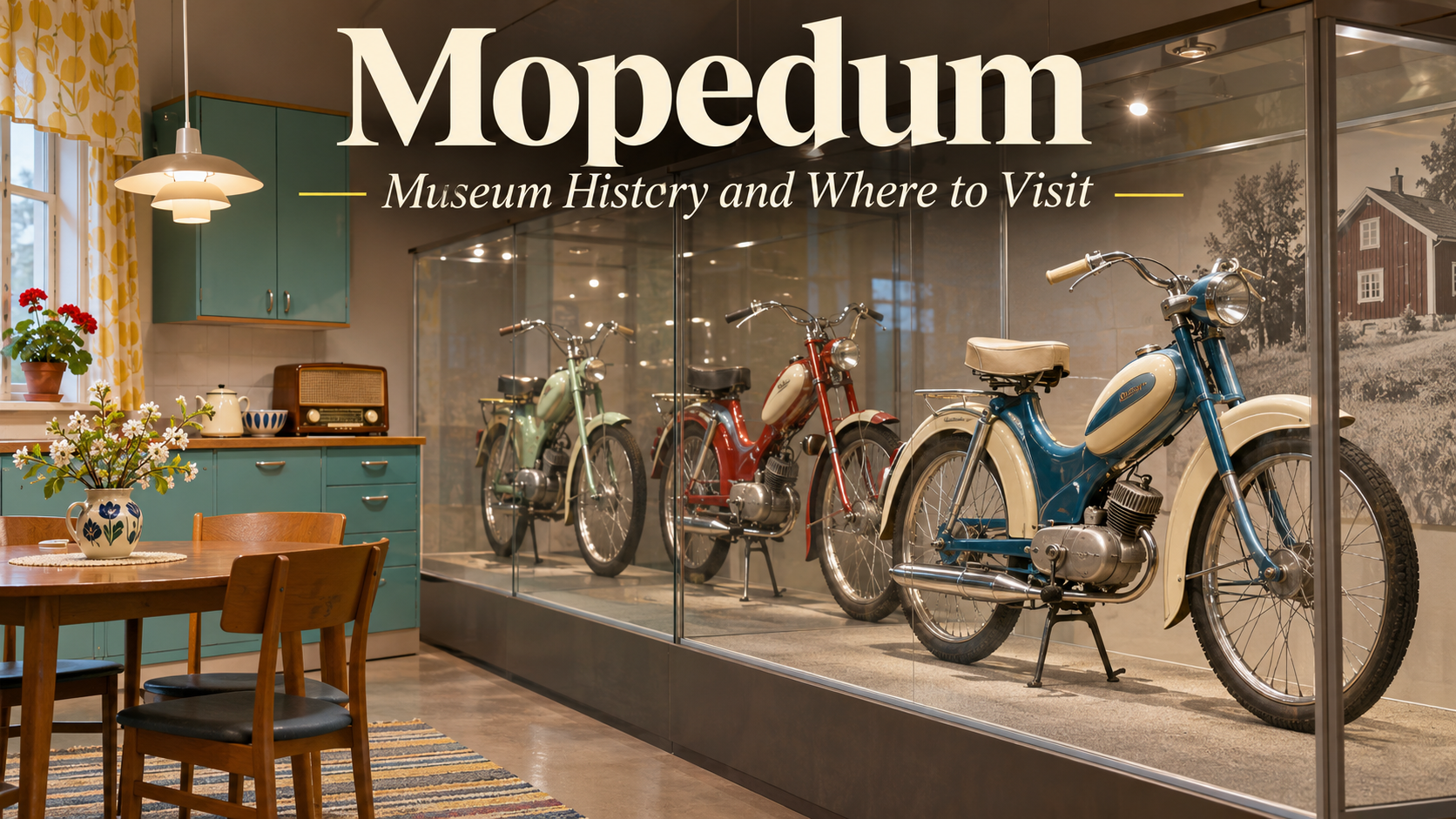
Mopedum was a Swedish nostalgia museum in Nynäshamn whose collection included vintage mopeds and everyday objects from the mid-twentieth century. The original museum closed in December 2022. Part of its legacy is now presented through the Nostalgimuseum displays at Vällingby Centrum, so an old address should not be used as a current visitor destination.
The distinction matters for anyone following a travel article, a remembered name or a photograph of a classic moped. A collection can survive after its original venue closes, but the new presentation may have a different name, layout and access arrangement. The useful question is therefore both historical and practical: what was Mopedum, and what can a visitor actually see now?
What Was Mopedum?
The regional Explore Archipelago listing describes the former museum in Nynäshamn as a place for vintage mopeds and familiar objects from the 1950s, 1960s and 1970s. It also explicitly records that the museum would close permanently in December 2022.
That listing preserves an important piece of travel history, including the former location on Vikingavägen. Its continued appearance in search results does not make the old venue operational. A historic attraction page can remain useful evidence about what once existed while being unsuitable as a guide to where a visitor should go today.
The name also suggests a narrower subject than the collection actually covered. Mopeds were a central attraction, but household goods and recreated domestic environments provided a wider picture of everyday life. That combination explains why later announcements describe the collection as a cultural resource rather than simply a group of vehicles.
Why the Original Museum Closed
A December 2022 announcement from Vällingby Centrum identifies Mopedum’s owners and creators as Nisse and Lotta Skogmyr. It says their decision to retire led to the opportunity to acquire the collection’s contents and a number of its mopeds.
The announcement describes a preservation decision: instead of allowing the objects to be dispersed through an auction, the centre would give the material a new setting. That is a documented explanation of the transfer. It does not establish that the original museum reopened elsewhere under an unchanged business or visitor arrangement.
It is also worth preserving the wording about the acquisition. The announcement refers to the contents and a number of mopeds. It should not be expanded into a claim that every item ever exhibited at Mopedum can now be found in one new display. A collection history and a complete present inventory are different things.
Where the Collection Can Be Seen Now
The current Nostalgimuseum visitor page at Vällingby Centrum describes period rooms and moped displays distributed through the shopping centre’s passageways. This is the relevant current presentation for readers interested in the former collection.
The setting differs from a conventional museum building with a single sequence of galleries. Objects and recreated environments appear in glazed displays within an operating centre. Visitors should expect to move between locations rather than assume that the name on an old travel listing will lead to a separate entrance marked Mopedum.
For an ordinary visit, use the centre’s current information and map. If you need a particular arrangement for a group, educational activity or access requirement, ask the operator before planning around assumptions. The material reviewed does not establish that all conventional museum services, guided tours or collection-research facilities are offered.
What the Displays Cover
The operator identifies a period spanning 1952 to 1979. Examples on its current page include a traditional shop setting, a 1950s kitchen and a 1970s children’s room. The moped display includes a selection of Swedish and European models, with brands such as Crescent, Husqvarna, Monark, Fram and Victoria.
These are useful starting points for looking closely. A room reconstruction invites comparison between ordinary objects: how goods were stored, how a kitchen was arranged or what children encountered at home. A vehicle display adds questions about design, mobility and the relationship between practical transport and personal identity.
The value of such a collection is not limited to recognising a particular possession from childhood. Visitors can compare how different objects belonged to the same period while serving different people and purposes. A remembered brand or familiar colour can begin a conversation, but it should not replace reading the labels attached to the actual exhibit.
Why Vällingby Is a Relevant Setting
Vällingby’s own history helps explain the choice of location. The centre’s historical account records its inauguration on 14 November 1954 and its association with the ABC planning principle: work, housing and a centre organised within the same district.
The City of Stockholm’s Stockholmskällan archive also explains this model and holds photographs, films and planning material documenting the area’s transformation. The district was designed as more than a place to sleep outside the city: daily needs, employment and services were meant to be accessible within the planned community.
That context gives ordinary mid-century objects a connection to their surroundings. A recreated domestic interior is being encountered in a district closely associated with ideas about modern everyday living. This is an interpretive connection between the collection and the location, not a claim that every displayed object originally belonged to a Vällingby household.
Planning the Journey
The centre’s official directions describe access by Stockholm’s green-line metro, buses, car and bicycle. Its metro stop serves the centre directly. Use the linked public-transport journey planner for the date and starting point that apply to you, rather than relying on a fixed travel time copied from an old article.
The operator currently says the exhibition follows the centre’s opening hours. Those published ordinary hours are not a guarantee for a future holiday, temporary closure or a particular showcase. Check the current opening information shortly before travelling, especially if this is the main reason for a longer journey.
Keep the destinations distinct when entering a map search. Nynäshamn is associated with the former Mopedum venue; Vällingby Centrum is the setting of the current Nostalgimuseum presentation. A saved photograph, a review date or a familiar museum name should not override that basic difference.
Make the Visit More Useful
Choose one or two themes rather than treating every case as an isolated object list. For example, compare the household display with the ideas about convenience and daily services found in the district’s planning history. Alternatively, concentrate on the design differences visible among the mopeds.
If visiting with relatives from different generations, invite personal memories while keeping them separate from exhibit facts. A family recollection can make a display engaging without proving that a particular object was used in every household. For schoolwork, note which statements come from an exhibit label, which come from an archive and which are someone’s own memory.
Do not assume a displayed moped is available to handle, start or ride. Treat it as a collection object and follow the operator’s instructions. A museum interpretation of historic transport is different from advice about operating, restoring or registering a vehicle today.
Frequently Asked Questions
Is the original Mopedum museum still open?
No. The regional destination listing records a permanent closure in December 2022. It should not be treated as a current attraction at its former Nynäshamn address.
Who created Mopedum?
Vällingby Centrum’s acquisition announcement identifies the owners and creators as Nisse and Lotta Skogmyr. Their retirement preceded the transfer described by the centre.
Where can visitors see material connected with it?
The current Nostalgimuseum presentation at Vällingby Centrum includes material acquired from the former collection. Check the operator’s visitor page and map for the displays.
Is the exhibition only about mopeds?
No. The presentation also includes period domestic and retail environments, helping place the vehicles alongside other aspects of everyday life from the same broad era.
Should I use an old Mopedum opening-hours listing?
No. Use the current Vällingby Centrum information for the new presentation, and confirm any special access needs or holiday arrangements directly with the operator.
