


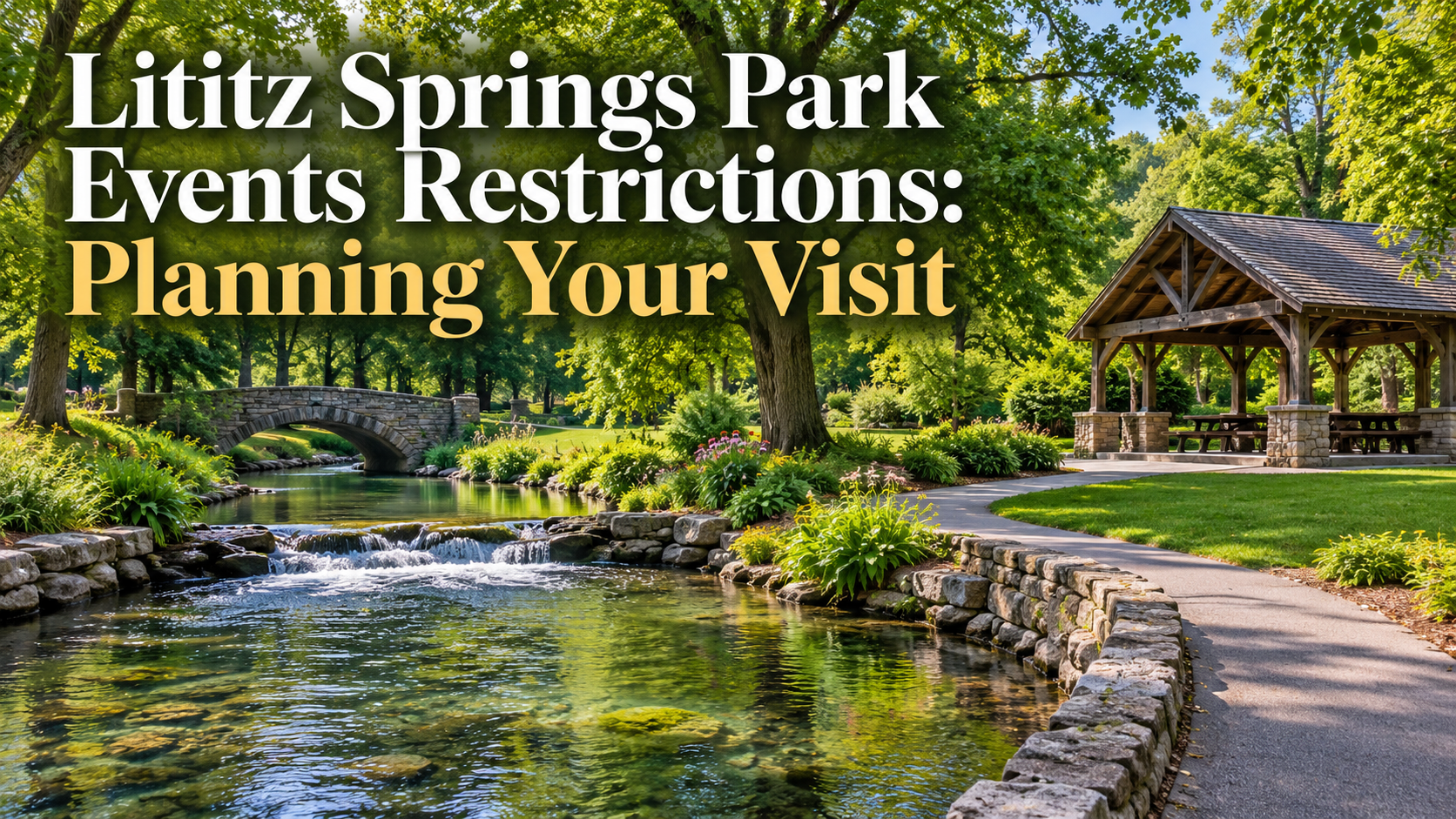
Lititz Springs Park events restrictions limit gatherings that would put excessive pressure on the grounds, while ordinary visits and approved smaller rentals remain possible. Anyone planning an event should obtain permission for the specific activity rather than assuming that a pavilion booking authorizes a festival, market or commercial production.
The practical distinction is between enjoying a park and operating an event venue. The park continues to offer places to meet, but its published explanation puts long-term landscape health ahead of accommodating every large gathering. For visitors, the most useful questions are what is still available, which approvals are needed, and how to avoid booking the wrong location.
What the Lititz Springs Park events restrictions actually mean
The park’s explanation of event limits focuses on repeated, intensive use of grass and tree-root areas. It describes the difficulty of restoring grounds after very large gatherings, particularly when crowds occupy the same spaces for several days. This is an environmental and maintenance rationale, rather than evidence that normal public access has ended.
The same statement addresses an apparent exception: the Fourth of July celebration helps fund repairs and ongoing care. Its continued presence should therefore not be read as a promise that another event with a similar attendance will receive approval. The board evaluates the effect of each proposal and the resources available to repair the grounds.
An event can move without disappearing. Lititz Borough Council’s March 31, 2026 minutes record a request to move L’Italia Festival to East Main and Water streets after changes in park policy. That is a specific documented relocation proposal, not a complete list of which events are permitted in every future season.
Why healthy ground matters when planning a gathering
A lawn is part of the park’s infrastructure. Foot traffic does more than flatten visible grass: it can compress the soil beneath it. Rutgers Cooperative Extension explains that compaction reduces the spaces between soil particles, making conditions less suitable for root growth. Wet conditions can make an otherwise manageable route more vulnerable to damage.
Trees also depend on the ground around them. The National Park Service’s guidance on tree-root compaction connects repeated foot or equipment traffic with declining tree health. Keeping a large crowd away from vulnerable ground can consequently protect an asset that takes far longer to replace than a patch of turf.
For an organizer, this changes the design brief. Instead of beginning with the largest crowd the space appears to hold, begin with how people will arrive, queue, gather and leave. A narrow entrance, a food queue or a popular photograph location may concentrate pressure on a small area even when the overall attendance looks modest. Ask staff which surfaces can support the intended use.
What visitors can still do
The official visitor FAQ lists free entry, park-use parking, public restrooms, playgrounds and pavilions. Normal opening is dawn to dusk, with event-related adjustments possible. The address is 24 North Broad Street, Lititz, Pennsylvania. Dogs are welcome on a lead, and posted reservations take priority over casual use of a rented space.
For a relaxed visit, the key is to keep the activity compatible with other people using the grounds. A picnic or family walk has different requirements from a public concert. If a gathering includes hired suppliers, ticket sales, stalls or dedicated equipment, explain those details before deciding that it is simply an informal meet-up.
Visitors following an old event listing should check the organizer’s current announcement for the venue, date and entrance. A search engine can retain a historic park address after a festival relocates. Checking the full street address is more reliable than assuming that a familiar event name still means the same site.
Pavilion rental is a defined booking, not unlimited permission
The park’s rental facilities page lists several sizes of space. At the time reviewed, approximate capacities ranged from 50 people at Harnley Pavilion to 300 at Bortz Pavilion; Boy Scout and Reedy pavilions were listed at approximately 60 and 160 respectively. Those descriptions help identify a suitable starting point, but capacity alone does not approve the proposed activity.
The rental information and form ask for at least two weeks’ notice and warn that a booking is not promised without it. This differs from the longer lead time for commercial approval. A family choosing a date should allow time for a response, written confirmation and any separate requirements before sending invitations or paying outside suppliers.
Its conditions also cover practical responsibilities: vehicles belong in parking areas, tables should be returned after use, and rubbish belongs in the provided containers. Permission is needed before stakes are driven into the ground because wiring may be present. Tell a tent supplier about that requirement before delivery, rather than expecting staff to resolve it while guests arrive.
Commercial activities need an earlier conversation
The published park regulations require prior board approval for commercial or for-profit use, with requests submitted at least one month ahead. Approved activities need liability insurance naming the park corporation as an additional insured. Large public events can also require borough permits. These are separate checks, so an organizer should ask which authority approves each part of a proposal.
Send a usable description: anticipated attendance, opening hours, setup and removal periods, supplier vehicles, power needs and the exact areas requested. Include whether admission is charged and whether goods are sold. This is a practical planning checklist, rather than a claim that sending these details guarantees acceptance. A clear proposal simply gives decision-makers a better basis for answering.
Avoid announcing a venue while approval is pending. Printing tickets or promoting a commercial shoot can create avoidable costs if permission is refused or a different layout is required. Written approval should match the activity that will actually happen; a later change in scale deserves another conversation with staff.
Rules that can change an event plan
The park prohibits alcohol, gambling, swimming in its water features and unapproved commercial selling. Personal photography and commercial photography are treated differently, with commercial work requiring advance permission. These conditions matter when choosing a venue: a celebration built around an alcohol service or a raffle may need a different setting rather than an assumption that a private booking changes park-wide rules.
Compare locations by their suitability for the whole event, not just their appearance. Warwick Regional Recreation Commission provides a separate regional pavilion directory; its facilities have their own calendars and conditions. Do not confuse Lititz Springs Park with Lititz Springs Pool, or treat a reservation through another operator as a reservation at the park.
For more location-based planning, Crave’s guide to checking champion-tree records explains another situation where a named place does not automatically establish visitor access. Our Alhambra night-tour guide similarly distinguishes published capacity from the arrangements available for a particular visit.
Frequently asked questions
Is Lititz Springs Park closed to visitors?
No. Its published visitor information continues to describe ordinary park access and rentals. Event limits should not be interpreted as a general closure; check official notices for any temporary restrictions affecting your date.
Can I reserve a pavilion for a family celebration?
The park advertises pavilion rentals, subject to availability and its conditions. Request the appropriate space and explain any suppliers or equipment. A reservation should be confirmed before you commit to non-refundable arrangements.
Why are some large events restricted while July Fourth continues?
The park explains that its July Fourth celebration contributes funding for repair and upkeep. That arrangement does not create automatic approval for other high-impact gatherings, even if they have a similar format.
Do commercial photographs need permission?
Yes. The published rules distinguish personal photographs from commercial photography, which needs advance approval. Contact park staff before scheduling clients, equipment deliveries or a production crew.
Where should an organizer check the latest requirements?
Use the park’s official regulations, rental form and staff response for park permission, then confirm any separate borough approvals. Keep that written information with the event plan so suppliers and volunteers work from the same instructions.
