


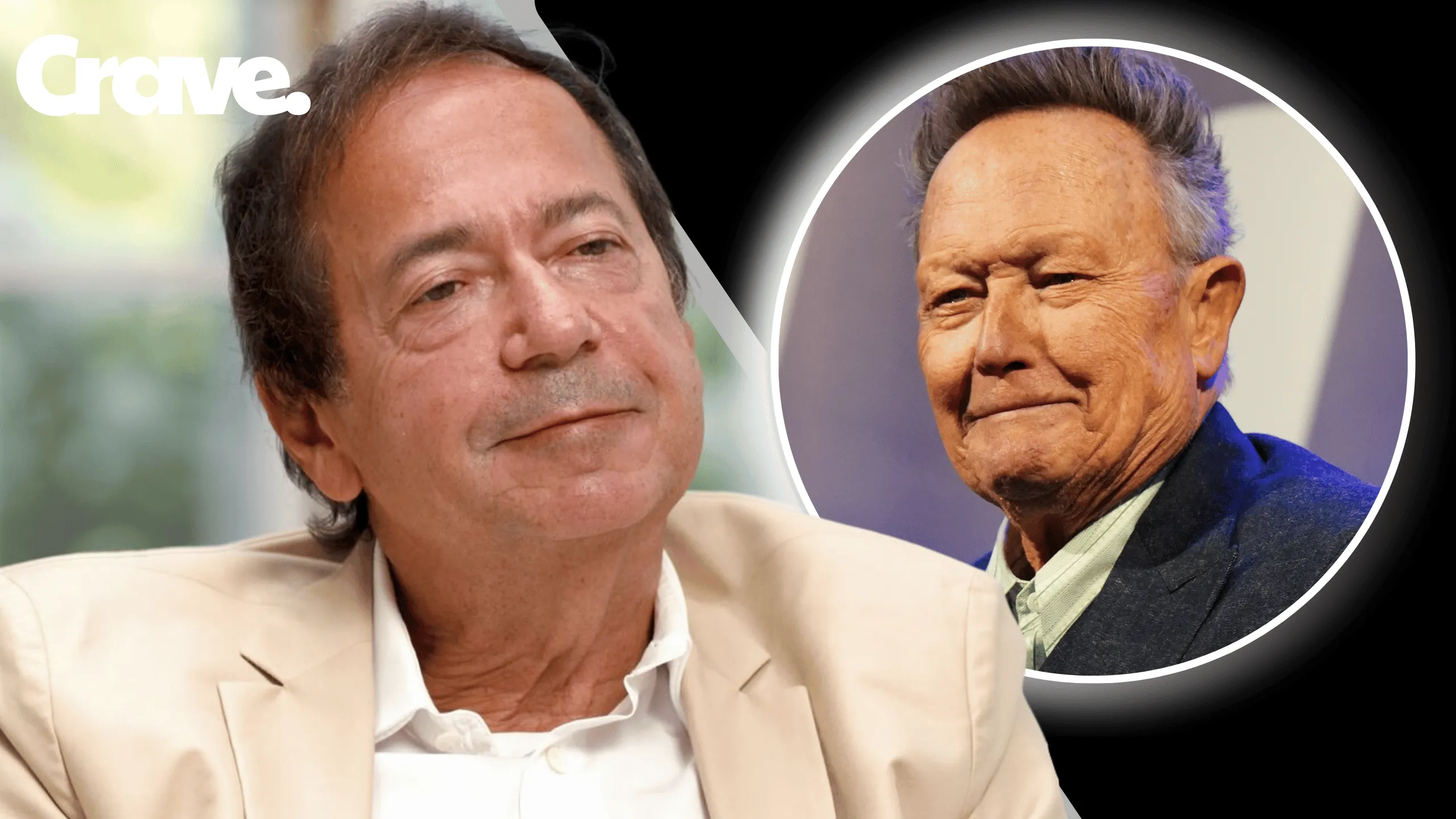
Richard Peery and John Paulson are both self-made American billionaires, but there is no reliable public evidence showing that they are relatives, business partners, or direct investment collaborators. Their fortunes also came from very different paths: Peery from Silicon Valley commercial real estate and Paulson from hedge-fund investing and financial markets.
One likely source of confusion is Richard Peery’s famous partnership with John Arrillaga, not John Paulson. Peery and Arrillaga spent decades developing Silicon Valley property and completed one of the region’s landmark commercial real-estate transactions in 2006. John Paulson, meanwhile, became internationally known for his investment firm’s highly profitable position against the U.S. subprime mortgage market before the 2008 financial crisis.
Richard Peery and John Paulson: What Is Their Actual Relationship?
No credible business filing, major financial publication, institutional biography, or public profile reviewed for this article documents a direct relationship between Richard Peery and John Paulson.
There is no verified indication that they:
- founded or operated a company together;
- were long-term business partners;
- are related by family;
- jointly established a charitable foundation;
- attended the same university;
- built their primary fortunes through the same enterprise.
Their names can appear in broader discussions or lists of wealthy American investors and entrepreneurs, but being included in the same wealth rankings does not establish a personal or commercial relationship.
The distinction matters because Richard Peery did have an extremely important business partner named John. That person was John Arrillaga, a fellow Silicon Valley real-estate developer. Forbes identifies Arrillaga as Peery’s longtime partner beginning in the 1960s.
Who Is Richard Peery?
Richard “Dick” Peery is an American real-estate developer best known for helping build a large commercial-property portfolio during Silicon Valley’s transformation from agricultural land into one of the world’s most important technology centers.
Forbes lists Peery’s primary source of wealth as real estate and identifies Palo Alto, California, as his residence. As of September 25, 2026, Forbes estimated his real-time net worth at approximately $3.4 billion. Such figures are estimates and can change as property values and other assets are reassessed.
How Richard Peery Built His Fortune
Peery gained experience by helping manage his father’s property holdings. In the 1960s, he joined forces with John Arrillaga, and the pair began acquiring land around what would become modern Silicon Valley.
Their timing proved significant. Agricultural areas in communities such as Mountain View, Sunnyvale, Santa Clara, Milpitas, and San Jose were transformed as semiconductor, computer, software, and later internet companies expanded across the region.
Peery and Arrillaga developed office and research properties that eventually housed major technology companies. Forbes describes them as early Silicon Valley property barons who acquired farmland and converted it into office parks.
Their approach created wealth differently from the founders of Silicon Valley technology companies. Peery did not need to invent a semiconductor or launch a software platform. His fortune was tied to owning and developing the physical space required by a rapidly expanding technology economy.
The Major 2006 Peery-Arrillaga Property Sale
A defining transaction occurred in 2006.
The San Francisco Chronicle reported that RREEF, then the real-estate investment division of Deutsche Bank, acquired a massive portfolio from Peery-Arrillaga comprising 119 buildings on 337 acres and approximately 5.3 million square feet of office and research space.
Forbes says Peery and Arrillaga sold many of their properties for approximately $1.1 billion that year. An SEC-filed document from the period also records the transfer of property previously owned by the Peery/Arrillaga Joint Venture.
The transaction illustrates why Peery is primarily associated with commercial real estate rather than financial-market investing.
Who Is John Paulson?
John Paulson is an American investor and founder of Paulson & Co., the investment firm he established in 1994.
He graduated from New York University and later received an MBA from Harvard Business School. Before starting his own firm, Paulson worked at organizations including Boston Consulting Group, Bear Stearns, and Gruss Partners. NYU Stern continues to identify him as president and portfolio manager of Paulson & Co.
Forbes estimated Paulson’s real-time net worth at approximately $11.8 billion as of September 25, 2026, while identifying hedge funds as the principal origin of his wealth. Like Peery’s figure, Paulson’s estimated fortune can fluctuate considerably as investment values change.
The Trade That Made John Paulson Famous
Paulson became globally known for anticipating severe problems in the U.S. subprime mortgage market before the financial crisis.
His firm used financial instruments that could increase in value as mortgage-related securities deteriorated. The strategy produced enormous profits when the housing and structured-credit markets weakened.
In testimony submitted to the U.S. House Committee on Oversight and Government Reform in November 2008, Paulson described Paulson & Co. as an investment adviser founded in 1994 that used event-driven strategies and at that time managed roughly $36 billion.
Forbes describes the 2007 subprime trade as the central event behind Paulson’s fortune and financial reputation.
This was fundamentally different from Peery’s wealth-building model. Peery accumulated and developed physical real estate over decades. Paulson made investment decisions involving securities, credit markets, corporate events, and other financial assets.
Paulson & Co.’s Move From Hedge Fund to Family Office
Paulson’s business evolved substantially after its peak years.
In July 2020, Reuters reported that Paulson planned to stop managing external clients’ money, return outside investor capital, and transform Paulson & Co. into a private investment or family office. The firm had approximately $10.7 billion in assets at the beginning of 2020, according to the report, compared with about $38 billion at its earlier peak.
Forbes continues to note this 2020 transition in Paulson’s current profile.
A family office generally manages private wealth belonging to an individual or family rather than operating primarily as an investment manager for outside clients.
Also Read: Phebe Novakovic and Brian Moynihan
Richard Peery vs. John Paulson: Key Differences
| Category | Richard Peery | John Paulson |
|---|---|---|
| Primary field | Commercial real estate | Investment management |
| Main wealth source | Silicon Valley properties | Hedge funds and investments |
| Major business association | Peery-Arrillaga | Paulson & Co. |
| Famous partner | John Arrillaga | No connection to Arrillaga documented |
| Main geographic association | Palo Alto and Silicon Valley | New York |
| Education | Brigham Young University | NYU and Harvard Business School |
| Forbes net worth, Sept. 25, 2026 | Approx. $3.4 billion | Approx. $11.8 billion |
| Verified direct relationship between them | None found in reliable public sources | None found in reliable public sources |
Net-worth estimates are snapshots rather than audited statements of cash holdings. Forbes calculates billionaire wealth using available valuations of companies, investments, property, and other assets, so numbers can change significantly over time.
Why Richard Peery Is Closely Associated With John Arrillaga Instead
Anyone researching Richard Peery and John Paulson should be especially careful not to confuse Paulson with John Arrillaga.
Peery and Arrillaga’s connection is extensively documented.
They partnered more than five decades ago and developed numerous commercial properties around Silicon Valley. Their buildings served companies including technology businesses such as Google and Intuit, according to Forbes.
An SEC filing related to a 2006 property transaction specifically identifies the Peery/Arrillaga Joint Venture and lists the John Arrillaga Survivor’s Trust and Richard T. Peery Separate Property Trust as sellers. This provides primary-source documentation of the Peery-Arrillaga commercial relationship.
John Paulson has no equivalent documented role in the Peery-Arrillaga partnership.
How Their Wealth-Building Strategies Differed
The contrast between Peery and Paulson is useful because it demonstrates two very different methods of creating substantial private wealth.
Peery Focused on Long-Term Property Development
Peery’s strategy was based on acquiring land, developing commercial buildings, securing tenants, retaining valuable property, and benefiting from the extraordinary expansion of Silicon Valley.
Real estate development generally requires substantial capital, patience, planning, construction, leasing, and exposure to local property cycles. Returns can emerge over decades as land becomes more valuable and rental income grows.
For Peery and Arrillaga, the growth of the technology industry dramatically increased demand for the type of commercial space they had developed.
Paulson Focused on Financial-Market Opportunities
Paulson’s professional background was in mergers, acquisitions, arbitrage, credit, and event-driven investing.
His signature mortgage trade was not a traditional property investment. He was not primarily buying houses or office buildings. Instead, his firm positioned itself financially to benefit when mortgage-related securities lost value.
Paulson’s career subsequently included investments across multiple sectors rather than being concentrated solely on real estate. NYU Stern describes Paulson & Co.’s historical strategies as including merger, event-driven, and distressed investing.
Their Philanthropic Activities Also Developed Separately
Both men became significant philanthropists, but their charitable activities do not establish a direct connection between them.
Richard Peery’s Philanthropy
The Peery Foundation was established by Richard Peery in 1978 and has supported organizations working with youth, families, poverty reduction, and social entrepreneurship, particularly in the San Francisco Bay Area and internationally.
Peery and members of his family also helped establish the H. Taylor Peery Institute of Financial Services at Brigham Young University. BYU says a $3 million endowment provided by Peery family members made the institute possible.
Forbes has also reported that Peery donated substantial sums through the Silicon Valley Community Foundation and its predecessor organizations.
John Paulson’s Philanthropy
Paulson’s giving has been particularly prominent in education.
Harvard announced a $400 million gift from Paulson in 2015 to support its School of Engineering and Applied Sciences. The school was subsequently named the Harvard John A. Paulson School of Engineering and Applied Sciences.
Forbes also notes that Paulson has given $100 million to New York University.
These philanthropic records again show separate institutional networks rather than a joint Peery-Paulson charitable project.
Are Richard Peery and John Paulson Related?
There is no reliable evidence that Richard Peery and John Paulson are related by blood or marriage.
Their publicly documented family backgrounds, careers, geographic bases, educational histories, companies, and philanthropic organizations are separate. Searches that pair their names should therefore not be interpreted as evidence of a family relationship.
Do Richard Peery and John Paulson Own a Company Together?
No verified public source reviewed for this article identifies a company jointly owned or founded by Richard Peery and John Paulson.
Peery’s best-documented commercial partnership was with John Arrillaga, while Paulson built his career through Paulson & Co. and later converted the investment operation into a family office.
What Do Richard Peery and John Paulson Have in Common?
Their strongest similarities are broad rather than organizational.
Both are American self-made billionaires who built fortunes through investment-related activities, although in different sectors. Both have also directed significant portions of their wealth toward philanthropy and educational or social causes.
Beyond those general similarities, their major businesses and career trajectories have largely operated independently.
FAQ
Are Richard Peery and John Paulson business partners?
No credible source reviewed for this article documents a business partnership between them. Richard Peery’s historically important partner was Silicon Valley developer John Arrillaga, not John Paulson.
Are Richard Peery and John Paulson related?
There is no reliable public evidence that they are family members. Their known family histories and professional backgrounds are separate.
How did Richard Peery make his money?
Peery built his fortune primarily through Silicon Valley commercial real estate. He and John Arrillaga acquired land and developed office and research properties that became increasingly valuable as the technology sector expanded.
How did John Paulson make his money?
Paulson accumulated much of his fortune through investment management. He became especially famous for his profitable position against the subprime mortgage market around the 2007 credit crisis and later continued investing through Paulson & Co.
What are Richard Peery and John Paulson worth in 2026?
Forbes estimated Richard Peery’s net worth at approximately $3.4 billion and John Paulson’s at approximately $11.8 billion on September 25, 2026. These are real-time estimates and should not be treated as permanent or audited values.
Who was Richard Peery’s longtime partner?
Richard Peery’s longtime business partner was John Arrillaga. Together they became major Silicon Valley commercial landlords and sold a substantial portion of their portfolio in 2006 for roughly $1.1 billion.
Also Read: John Paulson and Susan Wojcicki
