

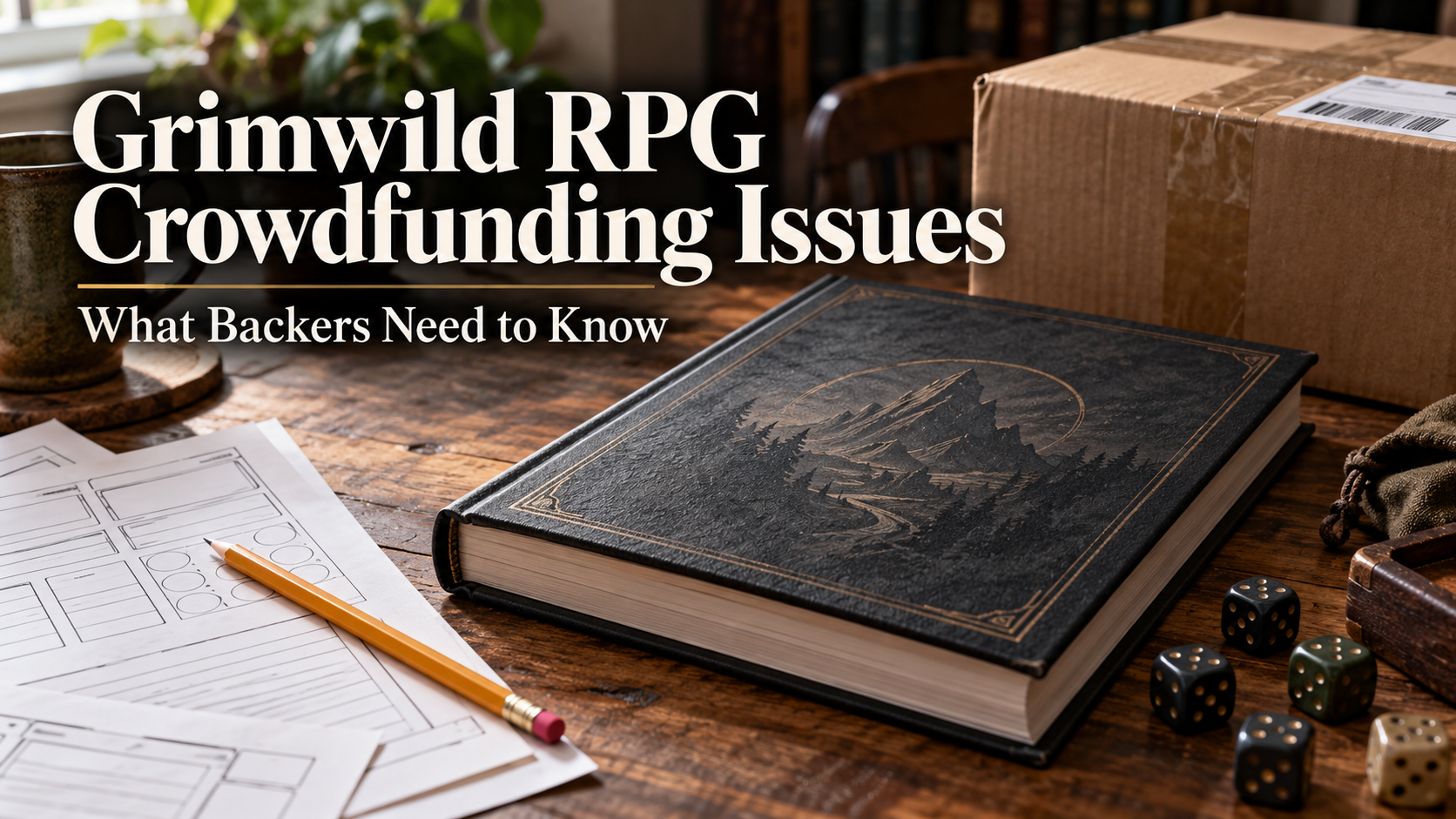
Grimwild RPG crowdfunding issues centre on undelivered physical rewards and a creator whom BackerKit says it has been unable to contact. The platform formally designated the Oddity Press project abandoned on January 6, 2026, while the game’s previously released digital material remains a separate question from outstanding book orders.
That distinction is important for anyone arriving from an old campaign link. A completed funding counter, an attractive rulebook preview and an earlier shipping estimate do not establish that a physical copy is ready to dispatch. Backers need to identify exactly what they paid for, what they received and which organisation can answer their particular question.
What the official Grimwild RPG crowdfunding issues update says
The January 2026 Trust & Safety notice says BackerKit exhausted its available contact routes and could not verify the creator’s circumstances or ongoing fulfilment. It identifies Oddity Press and J.D. Maxwell as the project creator. The platform also says the creator lost good standing and cannot use its services unless communication and meaningful fulfilment resume.
Collaborators quoted in that notice say they do not control the campaigns or project money. The notice does not announce a replacement publisher, a new delivery date or a refund fund. It therefore provides an administrative status, rather than a timetable for receiving outstanding rewards.
“Abandoned” is BackerKit’s project designation. It should not be expanded into an allegation of criminal conduct, or a claim about somebody’s health or private circumstances. Those are different propositions requiring different evidence. An unexplained absence is frustrating for customers, but it does not justify inventing an explanation.
What backers originally supported
The original Grimwild campaign describes a narrative fantasy tabletop roleplaying game using the Moxie rules system. It offered a hardcover, an exploration deck, dice and the Nevermore and Gaelenvale adventures. The page records $41,830 pledged by 590 backers when that campaign ended on July 11, 2024.
Those figures describe that particular campaign. They should not be mixed with a later print campaign, converted into a count of unique affected people, or treated as the creator’s profit. A person can support more than one campaign, change a pledge or buy additional items. A useful account preserves those distinctions instead of combining every visible number into one dramatic total.
Digital delivery and physical fulfilment are different
A roleplaying project can complete a playable PDF while still failing to deliver books, dice or cards. Digital production involves writing, editing, illustration and file distribution. Physical fulfilment adds manufacturing, quality control, freight, customs where applicable, storage, address collection and delivery to individual customers.
For a backer, the practical question is not simply whether “the game exists.” It is whether each promised part of that person’s order has been supplied. Someone who received a PDF may still have an outstanding hardcover. Someone else may have backed a digital tier that did not include physical products at all.
Make a simple order record with separate lines for each item. Mark each as received, available to download, missing or unclear. Include shipping charges separately from the original pledge. This turns a broad complaint into a specific account that a support representative can understand without reconstructing the whole history.
The same care is useful when researching unfamiliar publishers. Our Sosoactive website explainer separates what a site actually publishes from broader assumptions about its services. A campaign remaining online similarly does not prove that its old checkout or fulfilment promises remain actionable.
Who is responsible for refunds?
BackerKit’s Terms of Service place reward fulfilment and refunds with the project creator. The terms explain that backing a project creates an agreement with that creator, while BackerKit supplies services used to administer crowdfunding. They do not guarantee reward delivery or treat an estimated delivery date as a guaranteed deadline.
The terms also describe expectations when a creator cannot finish: explaining the work and spending, making reasonable efforts toward a resolution and addressing remaining funds or an alternative completion plan. These platform terms should not be read as a personalised assessment of any backer’s legal rights.
A platform support response, a card issuer’s decision and a court’s decision are different processes. Do not assume that failure to obtain a platform refund settles every other possible route. Equally, do not assume a payment dispute will succeed merely because a project has an abandonment notice. Individual circumstances, jurisdiction and applicable deadlines matter.
Build a useful evidence file before contacting support
Start with the original confirmation email and the payment entry. Record the campaign name, pledge tier, amount, payment date and transaction reference. Add later purchases and shipping payments in date order. If several people in one household backed the game, keep each account separate.
Save the version of the reward description associated with your pledge if you have it. Keep copies of relevant updates and your own messages. A concise timeline is more useful than a folder of unlabelled screenshots: state when you paid, what was promised, what arrived and when you last received a substantive answer.
When writing to support, lead with a clear request. You might need help finding a digital download, confirming which project your payment belongs to, or documenting that a physical reward remains missing. These requests require different information. Avoid sending passwords, complete card numbers or unrelated personal documents.
If you ask your payment provider about available options, describe the transaction accurately as a crowdfunding pledge or related purchase. Supply the actual dates and evidence rather than choosing a description that sounds more favourable. Ask which rules apply to your payment method and whether any relevant time limit has already passed.
How to judge a new fulfilment claim
A credible recovery announcement should identify the organisation taking responsibility and explain what it controls. Possessing game files is different from controlling inventory, warehouse accounts, customer addresses and sufficient money to post thousands of parcels. A sympathetic community organiser may have none of those resources.
Look for a dated statement on a channel already connected to the project. If another company says it will rescue fulfilment, check that company’s own announcement as well. Ask whether the proposal covers all backers or only a new purchase, and whether additional charges are voluntary or necessary.
Be especially careful with unsolicited requests to pay a small “release fee.” Verify the sender through an independently opened official page before responding. A real project problem can create opportunities for unrelated impersonators. Screenshots of supposed stock, without an identifiable responsible party and a clear delivery plan, are weak evidence.
Our BotPower website assessment uses the same basic discipline: identify the exact service and examine supported claims before handing over money or account information. Familiar branding alone does not establish who is behind a message.
Frequently asked questions
Is Grimwild completely unavailable?
The physical reward problem should not be confused with the existence of previously released digital rules. Check your own download library and pledge records. An old campaign offering a book is not confirmation that new physical orders will be fulfilled.
Has BackerKit promised a refund?
No refund promise is contained in the abandonment notice reviewed here. BackerKit says it cannot issue or compel refunds on the creator’s behalf. Ask support about your record, while recognising the limits of its stated role.
Does the abandoned designation prove fraud?
No. It documents the platform’s assessment of project inactivity and failed communication. A finding of fraud requires evidence and an appropriate legal process; it should not be inferred from the designation alone.
Should I pay someone claiming to release my book?
Verify the organisation, its authority over your order and the full terms first. Do not rely on an unsolicited message, a community username or a screenshot. Ask for a clear explanation of what payment would purchase.
What would change the current assessment?
A verifiable official announcement establishing renewed communication, responsibility and practical fulfilment would matter. A fresh shipping estimate without supporting detail would provide much less reassurance. Keep the date and scope of every new claim clear.
